The recruiter searches the CRM for profiles that may match the study criteria and passes that call list to AnswerPal.

Practical example
Phone pre-screening for clinical studies
A clinical research center starts from profiles that the recruiter selects in the CRM based on the study criteria. AnswerPal calls these candidate participants itself, explains why it is calling and first asks whether now is a good time. If not, AnswerPal records the callback time and calls back later. If the timing works, AnswerPal asks the screening questions, follows up where relevant and turns the recording, transcript and highlights into an internal follow-up status with an AI assessment for the recruiter.
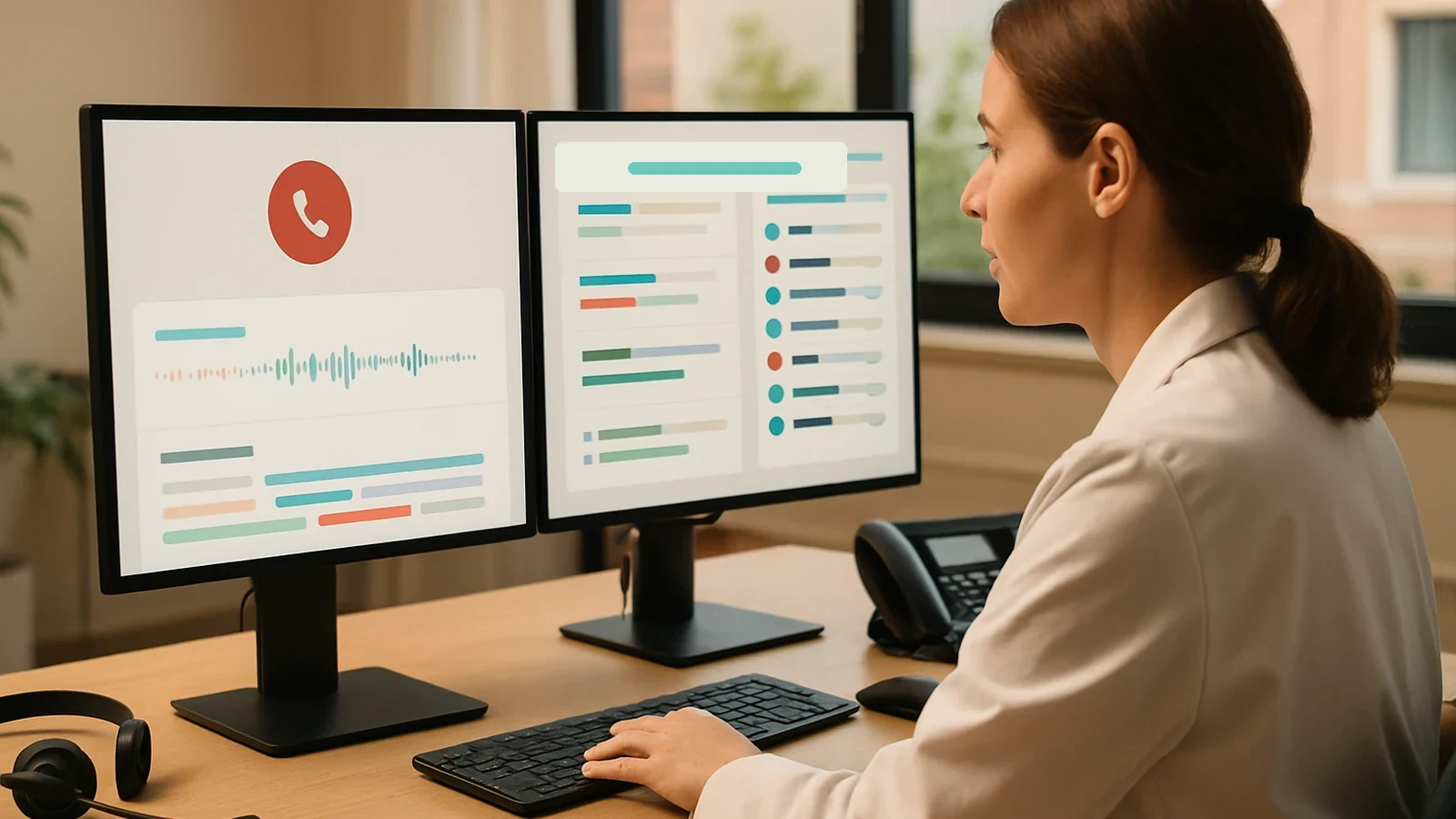
The conversation must remain calm, respectful and non-judgmental, especially when it involves health or alcohol use.
When questions fall outside the instructions, AnswerPal says they must be checked. During the call, AnswerPal does not tell anyone whether they may participate; the internal follow-up status can include an AI assessment for review by the recruiter or doctor.
Before versus today
The goal is not to remove human contact. AnswerPal takes over the outbound call round, the first structured phone conversation, the recording, the transcription and the processing into follow-up-ready information.
Vroeger
New study starts
The recruiter searches the CRM for profiles that may match the study criteria.
Work through the call list
Candidates are called one by one to discuss interest, availability and basic criteria.
Run through the script
The employee asks, for example, about consumption patterns, peak days, medication and medical points of attention.
Interpret notes
Loose notes then need to be summarized and compared with the study criteria.
Manual follow-up
Suitable candidates are pulled from the notes and followed up again for an appointment or doctor review.
Vandaag met AnswerPal
Call list from CRM
The recruiter gives AnswerPal a list of potential candidates based on the study criteria.
AnswerPal calls out
AnswerPal calls the candidate, explains why it is calling and asks whether now is a good time. If not, it records a callback time.
Targeted follow-up questions
For example, in a study around alcohol use in combination with a medicine, AnswerPal asks follow-up questions about alcohol type, quantities, alcohol units, medication and availability.
Recording, transcript and highlights
The call is recorded, can be replayed and is turned into a transcript, highlights and structured answers.
Only approved questions
Predefined questions, for example about practical conditions or vaccination during the study, can be answered. For questions outside the instructions, AnswerPal says this must be checked.
Internal AI assessment
AnswerPal extracts the highlights and all information the recruiter needs, and provides an internal AI assessment for follow-up.
Recruiter follow-up
The recruiter sees a filterable list, can replay the recording and decides on a next appointment or doctor review.
How it works
The workflow starts from one concrete study script, a CRM call list and clear instructions. AnswerPal calls out, records the callback time when needed and calls back later. It then conducts the call, records it, transcribes it and prepares highlights with an internal AI assessment that can be safely reviewed.
Study script and criteria
The questions, inclusion/exclusion criteria and allowed answers are defined per study.
Outbound calls from a CRM list
AnswerPal calls the selected candidates, checks whether now is a good time and conducts the conversation in plain language.
Ask relevant follow-up questions
When answers are unclear, the AI calmly asks follow-up questions about what matters for the study criteria, such as alcohol type, alcohol units, peak days, medication and availability.
Recording and transcription
The full call is recorded and transcribed so the recruiter can review or replay the source later.
Highlights and extraction
AnswerPal extracts highlights and fields from the call, such as callback time, consumption estimate, medication, points of attention and availability.
Internal AI assessment
The output contains an AI assessment with a reason, doubts and a recommended follow-up action. That assessment is intended for the recruiter or doctor; during the call, the candidate receives no participation judgment.
CRM or dashboard
The summary can be stored in a CRM such as Zoho, or temporarily per study in a dashboard with filters.
Human review
The recruiter reviews the recording, transcript and fields, plans next actions and escalates medical or sensitive questions to the right person.
What does it deliver?
For this type of process, reliability matters more than blind automation. The value is mainly in consistency, speed and reviewability.
For each study, the recruiter sees who may be suitable, who needs review and who should be contacted again later.
Every AI assessment can be checked in the highlights, the transcript or by replaying the recording.
The flow can be configured so the tone matches careful and warm recruitment.
Practical benefits
- AnswerPal automatically calls the candidates that the recruiter provides from the CRM.
- If the call is not convenient, AnswerPal records the callback time and picks it up again later.
- The same script is followed consistently, including for sensitive or complex criteria.
- The call produces a recording, transcript, highlights and structured fields.
- Each study gets a temporary list that can be filtered by follow-up status.
- The CRM remains the main source; long transcripts can be stored separately with a link or reference.
- AnswerPal can answer predefined questions; for questions outside the instructions, it says this must be checked.
- During the call, AnswerPal gives no participation judgment; internally, the follow-up status can contain an AI assessment for review by the recruiter or doctor.
Where is human review still needed?
AnswerPal may not replace informed consent, give medical advice or make a judgment during the call about actual participation. It can answer predefined questions. For questions outside the instructions, AnswerPal says this must be checked. The internal follow-up status may contain an AI assessment, but the decision remains with the recruiter or doctor.
Recognize this process?
AnswerPal starts from one concrete script and makes clear which steps can be safely prepared, which data goes to the CRM and where human review remains required.
